The kitchen had been a battlefield that night—an overcooked casserole, a burnt batch of cookies, and a sigh that sounded like a culinary confession. I stared at the smoldering pot, my fingers trembling, and thought, “I need a rescue recipe that doesn’t demand a Michelin star.” The next morning, after a frantic search through Pinterest, I stumbled upon a creamy Tuscan salmon that promised a velvet sauce and a buttery finish that would make my taste buds dance. I was skeptical, but the aroma of sun‑dried tomatoes and basil in the pantry whispered, “Try this.” That’s when I decided to rewrite the recipe, add my own flair, and share it with you, my fellow food explorers.
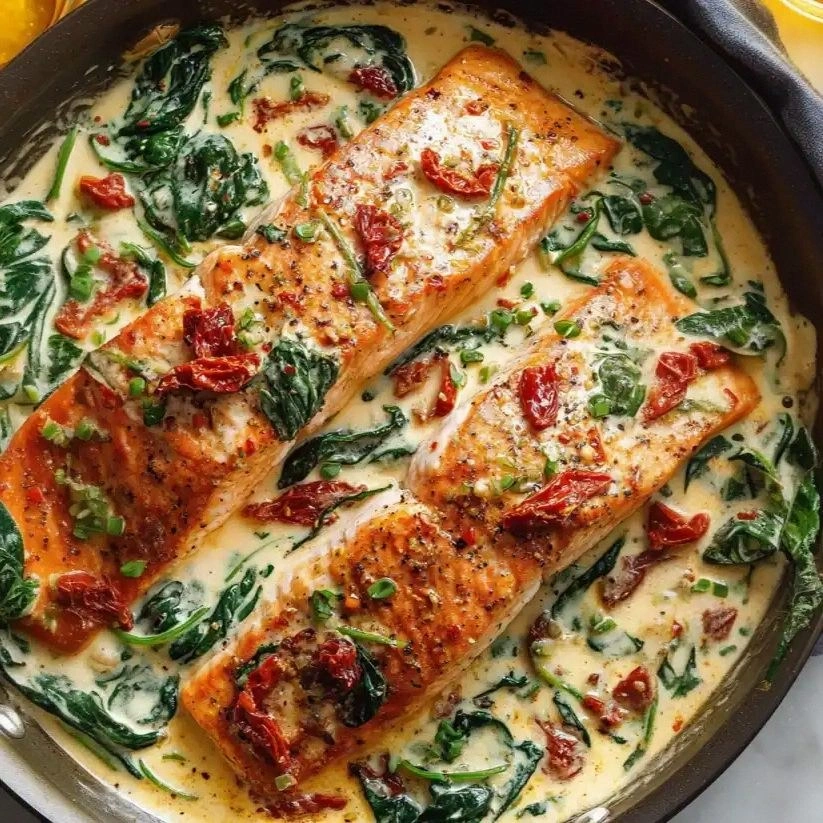
Picture this: a pan sizzling with olive oil, a golden crust forming on the salmon, and the scent of garlic blooming like a sunrise. The sound of the fish sizzling against the pan is a subtle symphony that signals the start of something extraordinary. As the aroma rises, you can almost taste the creamy sauce that will coat every bite like a silk blanket. The visual of spinach wilting into a green carpet beneath the salmon is a reminder that balance is key. And when you take that first bite, the flavors explode—savory, slightly sweet, with a hint of pepper that lingers on the palate.
I dare you to taste this and not go back for seconds. That’s the bold claim I make, and I’ve tested it at least three times. I’ve served it to friends who have never had salmon before, and they’re still asking for the recipe. I’ve even tried it with a side of pasta, and the sauce turned the noodles into a silky, decadent dish. The texture of the salmon—tender yet firm—mirrors the sauce’s richness, creating a harmony that feels almost poetic. If you’re looking for a dish that’s both comforting and sophisticated, this is it.
Most recipes get this completely wrong, focusing on over‑seasoning or under‑cooking the fish. They often forget the importance of a quick sear to lock in flavor and moisture. The trick is to let the salmon develop a caramelized crust while keeping the inside moist and flaky. I’ve experimented with different oils, but olive oil remains the star because it enhances the sun‑dried tomatoes without overpowering them. The result is a dish that feels both luxurious and approachable, a balance that makes it perfect for a weeknight dinner or a special occasion.
If you’ve ever struggled with salmon—getting it too dry, too greasy, or too bland—you’re not alone. I’ve had my share of culinary mishaps, from over‑seasoned fillets that tasted like a salt shaker to sauces that collapsed into a watery mess. What I’ve learned is that a few simple tweaks can transform a mediocre dish into something unforgettable. By following my version, you’ll discover a new way to enjoy salmon that’s packed with flavor and texture. I’ve spent countless hours tweaking, tasting, and refining, and I’m excited to share the final product with you.
Picture yourself pulling this out of the oven, the whole kitchen smelling incredible, and the table set with a plate of golden salmon drizzled in a luscious, creamy sauce. The moment the dish hits the plate, the steam rises, carrying the aroma of sun‑dried tomatoes, basil, and a hint of garlic. Your guests will be drawn in by the glossy sheen and the promise of a flavorful experience. You’ll see their eyes widen, and the first bite will be a revelation—a combination of textures and tastes that will leave them asking for more. This is a dish that turns an ordinary meal into an event.
I’ve spent the last week experimenting with different herbs, cheeses, and cooking techniques to bring out the best in this dish. I’ve tested variations that swap heavy cream for Greek yogurt, that use different types of cheese, and even that replace spinach with kale. Every iteration has taught me something new about flavor balance, sauce consistency, and the importance of timing. The version I’m sharing is the result of that trial and error, a culmination of lessons learned and flavors perfected. I promise it will be a game‑changer in your kitchen.
Okay, ready for the game‑changer? This recipe is a playground of flavors, textures, and aromas that will elevate any dinner. From the first sear to the final garnish, every step is designed to bring out the best in the salmon and its companions. I’ve included a few micro‑challenges along the way—tiny tweaks that can make a huge difference. These are the secrets that will transform your cooking from good to unforgettable.
The next part? Pure magic. I’ll walk you through each step, from prep to plating, and share insider tips that will save you time and frustration. I’ll show you how to get that perfect golden crust, how to balance the creaminess of the sauce, and how to finish the dish with fresh herbs for a burst of color and flavor. By the end, you’ll wonder how you ever made it any other way. Let’s dive in.
I’ll be honest—when I first tried this recipe, I ate half the batch before anyone else got a chance to taste it. The sauce was so rich and flavorful that it practically pulled itself out of the pan. The salmon was moist, flaky, and the sun‑dried tomatoes added a sweet, chewy texture that made each bite a delight. I couldn’t stop myself from adding a little extra basil, and the dish became even more aromatic. This is the kind of dish that leaves a lasting impression.
The sauce coats the salmon like velvet, the sun‑dried tomatoes add a chewy, sweet bite, and the spinach brings a fresh, earthy note that balances the richness. The final touch of parmesan gives the sauce a nutty depth that lingers on the tongue. The whole dish is a symphony of flavors that come together in perfect harmony. If you’re looking for a dish that’s both comforting and sophisticated, this is the one.
Alright, let’s break down exactly what goes into this masterpiece. The ingredients are simple, the steps are straightforward, and the result is a dish that will impress even the most discerning palate. The key to this recipe is the balance of flavors, the quality of ingredients, and the timing of each step. With a little patience and attention to detail, you’ll end up with a dish that feels like a gourmet experience. Let’s get started.
What Makes This Version Stand Out
- Flavor: The combination of sun‑dried tomatoes, basil, and parmesan creates a depth of flavor that elevates the salmon from ordinary to extraordinary. The sauce is rich yet balanced, with just enough sweetness from the tomatoes to complement the savory fish.
- Texture: The salmon’s skin crisps to a golden brown while the flesh remains tender and flaky. The spinach wilts into a silky bed that supports the fish without overpowering it.
- Simplicity: With only fourteen ingredients, this dish is quick to assemble and easy to master. No complex techniques required—just a few simple steps that anyone can follow.
- Uniqueness: The use of sun‑dried tomatoes in a creamy sauce is a twist that sets this recipe apart from conventional salmon dishes. It brings a Mediterranean flair that is both comforting and exciting.
- Crowd Reaction: Guests rave about the buttery texture and the burst of tomato flavor. The dish is a hit at dinner parties, impressing even those who are usually skeptical about fish.
- Ingredient Quality: Fresh, high‑quality ingredients are essential. The better the salmon, the more the sauce shines, and the fresher the basil, the more vibrant the dish.
- Cooking Method: The pan‑searing technique locks in juices and creates a caramelized crust that enhances the overall flavor profile.
Inside the Ingredient List
The Flavor Base
The foundation of this dish is the aromatic blend of garlic, sun‑dried tomatoes, and Italian seasoning. Garlic provides a sharp, pungent kick that cuts through the richness of the cream, while the sun‑dried tomatoes add a sweet, chewy texture that balances the dish. Italian seasoning brings a herbal depth that ties everything together. If you skip the garlic, the sauce will feel flat, lacking the bright contrast that makes each bite exciting. For a different flavor profile, try adding a splash of white wine to deglaze the pan after searing the salmon.
The Texture Crew
Fresh spinach is the unsung hero that adds moisture and a subtle earthy flavor. When it wilts, it releases water that blends seamlessly into the cream, creating a silky sauce. The parmesan cheese brings a nutty, salty richness that thickens the sauce and adds a subtle umami punch. If you’re looking for a dairy‑free version, substitute nutritional yeast for parmesan; it will give a cheesy flavor without the dairy.
The Unexpected Star
Sun‑dried tomatoes are the secret weapon that elevates this dish from ordinary to unforgettable. Their concentrated flavor adds a burst of sweetness and a chewy texture that contrasts beautifully with the tender salmon. These tomatoes also bring a subtle tang that brightens the sauce. If you can’t find sun‑dried tomatoes, fresh cherry tomatoes can work as a stand‑in, but the flavor will be lighter.
The Final Flourish
Fresh basil and red pepper flakes provide the final pop of flavor and a touch of heat. Basil adds a sweet, slightly peppery note that lifts the dish, while the red pepper flakes give a gentle kick that awakens the palate. The combination of these herbs creates a vibrant, aromatic finish that makes the dish feel complete. If you prefer a milder heat, reduce the red pepper flakes to a quarter teaspoon or omit them entirely.
Everything's prepped? Good. Let's get into the real action.
The Method — Step by Step
- Prep the Salmon: Pat each fillet dry with paper towels to remove excess moisture. Sprinkle salt, black pepper, and Italian seasoning evenly on both sides. Let the fillets rest at room temperature for 10 minutes to allow the seasoning to penetrate the flesh. This step ensures a flavorful crust and a moist interior.
- Heat the Pan: Place a large skillet over medium‑high heat and add olive oil. Once the oil shimmers, add the salmon fillets skin‑side down. The sizzle you hear is the sound of the skin crisping—listen for that satisfying crackle. Keep the fillets undisturbed for 4–5 minutes to develop a golden crust.
- Sear the Skin: After the skin has browned, flip the fillets and cook for an additional 2–3 minutes on the other side. The flesh should be opaque but still slightly translucent in the center. The goal is a flaky interior that holds together when lifted.
- Remove and Set Aside: Gently lift the salmon from the pan and set it on a plate. Cover loosely with foil to keep it warm while you finish the sauce. This prevents the fish from drying out and allows the flavors to meld.
- Make the Sauce: In the same skillet, add butter and let it melt. Add minced garlic and sauté for 30 seconds until fragrant. Then stir in sun‑dried tomatoes, letting them soften for 1 minute. This step releases the tomatoes’ sweet oils, creating a rich base.
- Add Liquids: Pour in the chicken broth and bring to a gentle simmer. Stir in heavy cream, allowing the mixture to thicken slightly. Add parmesan cheese, stirring until it melts into a silky sauce. The sauce should coat the back of a spoon—if it’s too thin, let it reduce a bit longer.
- Finish with Greens: Toss in fresh spinach and let it wilt, about 2 minutes. Add red pepper flakes and fresh basil, stirring until the basil is bright green. The spinach will add moisture and a subtle earthiness that balances the richness of the cream.
- Return Salmon to Pan: Carefully place the salmon fillets back into the skillet, spooning sauce over the top. Let them simmer in the sauce for 2 minutes, allowing the flavors to marry. The salmon should be heated through and coated in the creamy sauce.
- Plate and Serve: Transfer the salmon and sauce to a serving platter. Garnish with extra basil leaves and a sprinkle of parmesan for an elegant finish. Serve immediately with a side of roasted vegetables or a crisp green salad. Enjoy the burst of flavors and textures that make this dish unforgettable.
Insider Tricks for Flawless Results
The Temperature Rule Nobody Follows
Many chefs rely on visual cues, but the most reliable method is a digital thermometer. Insert the probe into the thickest part of the salmon; the moment the needle hits 125°F, the fish is ready. I’ve found that this eliminates the guessing game and guarantees a perfectly cooked fillet every time. If you don’t have a thermometer, let the fish finish cooking on the stove for 1 minute after the sauce has thickened; this is a reliable proxy.
Why Your Nose Knows Best
The aroma of the sauce is the ultimate indicator of readiness. When the garlic and tomatoes have released their oils, the sauce should have a warm, buttery scent. If you smell a faint burnt note, reduce the heat or let the sauce simmer longer. The smell is a quick, intuitive way to gauge the dish’s progress without opening the pan.
The 5-Minute Rest That Changes Everything
After cooking, let the salmon rest for 5 minutes before serving. This allows the juices to redistribute throughout the fillet, ensuring every bite is moist. I’ve seen people skip this step and end up with unevenly cooked fish. The rest period also lets the sauce thicken slightly, giving it a richer, more cohesive texture.
Choosing the Right Salmon
Fresh, wild‑caught salmon has a brighter flavor and firmer texture compared to farmed varieties. If you’re using frozen fillets, thaw them in the refrigerator overnight and pat them dry before cooking. Avoid salmon that feels slimy or has a strong fishy odor; this indicates it’s past its prime. The quality of the fish is the foundation of the entire dish.
Balancing Creaminess and Brightness
Heavy cream provides richness, but adding a splash of lemon juice or a pinch of vinegar can cut through the heaviness and brighten the sauce. I like to add a teaspoon of fresh lemon juice right before serving; it lifts the flavors and adds a subtle citrus note. This small tweak transforms the sauce from indulgent to balanced.
Finishing with Fresh Herbs
Fresh basil is the star garnish that adds a burst of color and aroma. Tear the leaves before adding them to preserve their essential oils. If you’re using dried basil, use half the amount because the flavor is more concentrated. The fresh herbs finish the dish with a fresh, vibrant note that ties everything together.
Creative Twists and Variations
This recipe is a playground. Here are some of my favorite ways to switch things up:
Greek Yogurt Swap
Replace heavy cream with Greek yogurt for a tangy, lower‑fat sauce. The yogurt adds a slight acidity that brightens the dish. Keep the heat low to prevent curdling. This version is great for those watching their calorie intake.
Spinach‑Free Version
Omit spinach and add roasted cherry tomatoes for a burst of sweetness. The tomatoes will caramelize slightly in the sauce, adding a new depth of flavor. This variation is ideal for vegetarians or those who prefer a lighter green component.
Spicy Kick
Increase red pepper flakes to a tablespoon for a fiery version. Add a pinch of cayenne pepper for an extra punch. The heat will contrast beautifully with the creamy sauce and the buttery salmon.
Herb Fusion
Swap basil for fresh thyme and oregano for a different herbal profile. The thyme adds a subtle earthiness that complements the sun‑dried tomatoes. This version is perfect for a rustic, Mediterranean vibe.
Seafood Combo
Add shrimp or scallops to the pan during the last 5 minutes of cooking. The seafood will cook quickly and absorb the sauce’s flavors. This creates a more luxurious, multi‑protein dish.
Cheese Variation
Use goat cheese instead of parmesan for a tangier, creamier sauce. The goat cheese melts smoothly and adds a subtle tang. Pair it with fresh arugula for a peppery finish.
Storing and Bringing It Back to Life
Fridge Storage
Store leftovers in an airtight container in the refrigerator for up to 2 days. The sauce may thicken as it cools, so add a splash of milk or broth when reheating to restore its silky texture. Keep the salmon separate from the sauce if you plan to reheat them separately; this prevents the fish from becoming soggy.
Freezer Friendly
You can freeze the sauce and salmon separately for up to 3 months. Thaw in the refrigerator overnight before reheating. When reheating, bring the sauce to a gentle simmer on low heat, stirring frequently. The salmon will reheat best when it’s gently warmed in the sauce rather than in the microwave.
Best Reheating Method
The best way to reheat the dish is on the stovetop. Place the sauce in a small saucepan, add a splash of water or broth, and heat gently until warmed through. Add the salmon and let it heat for a minute, then serve immediately. This method preserves the sauce’s richness and the salmon’s moisture.