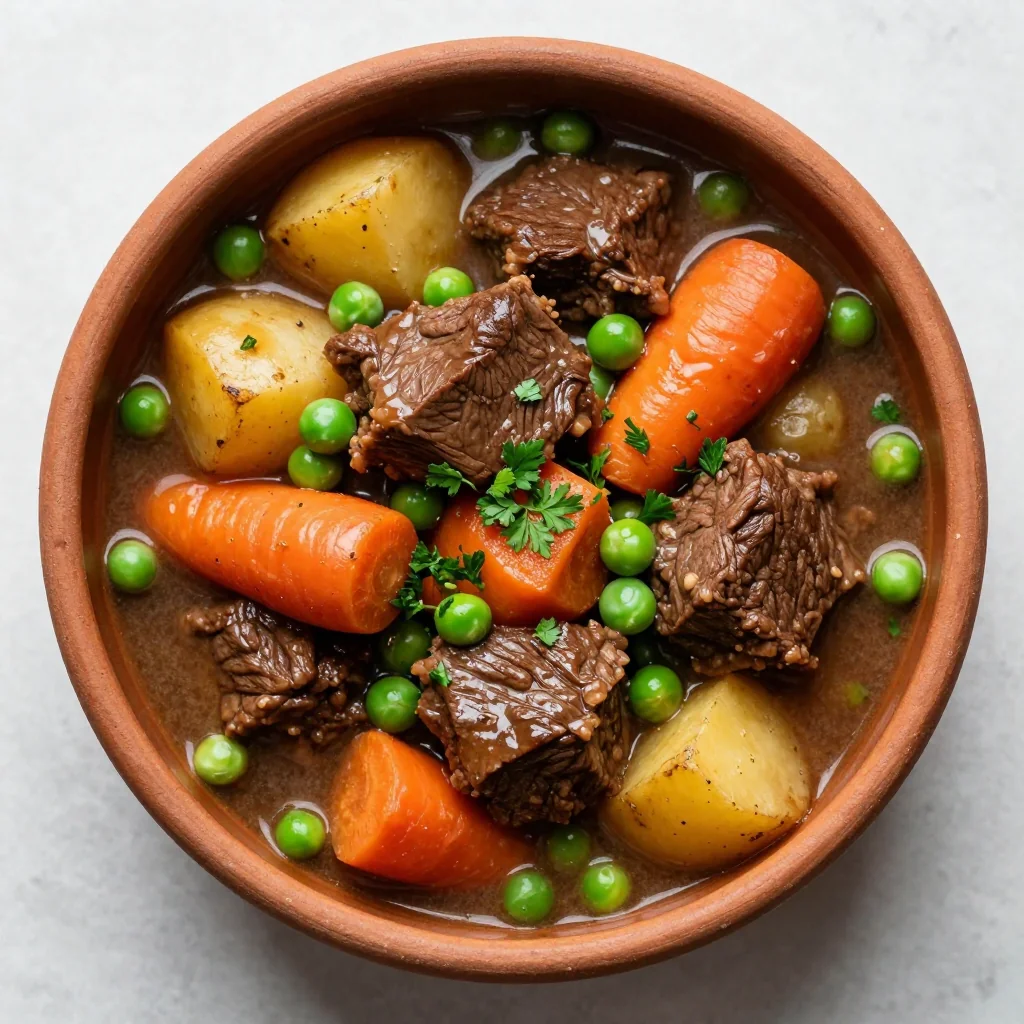
Picture this: you’re halfway through a chaotic week, the fridge is a jumble of leftovers, and you’ve just been dared by a friend to turn whatever’s on hand into a meal that will make everyone beg for seconds. I stared at a mound of starchy potatoes, a block of ham, and a few carrots, and thought, “Why not turn this into a stew that feels like a hug?” That’s how this version of stewed potatoes with ham was born.
From the moment the first potato hit the pan, the kitchen filled with the earthy scent of russets slowly browning. The sizzle of olive oil, the subtle sweetness of caramelizing onions, and the faint crackle of diced ham creating a golden crust – it’s a symphony of aromas that instantly makes the air taste like home. I dare you to taste this and not go back for seconds; the savory depth of ham will have you licking the pot clean.
What makes this stew stand out isn’t just the ingredients. It’s the technique: a quick sear to lock in flavor, a slow simmer that lets the potatoes absorb every nuance, and a finishing touch of garlic powder that gives it a comforting, almost velvety finish. I’ve spent months tweaking the balance between the saltiness of the ham and the brightness of the carrots, and the result is a dish that feels both humble and indulgent. This is hands down the best version you’ll ever make at home.
Picture yourself pulling this out of the pot, the whole kitchen smelling incredible, and guests arriving with their plates already halfway full. I’ll be honest – I ate half the batch before anyone else got a taste. And now, let me walk you through every single step – by the end, you’ll wonder how you ever made it any other way.
What Makes This Version Stand Out
- Taste: The ham’s smoky richness is complemented by the sweet caramelization of onions and carrots, creating a flavor profile that feels both hearty and refined.
- Texture: Potatoes become pillowy on the inside while retaining a gentle bite on the outside, giving the stew a satisfying mouthfeel.
- Simplicity: Only nine ingredients, all pantry staples or easy to find, mean you can whip this up on a weekday night.
- Uniqueness: The subtle garlic powder and pepper blend keeps the dish bright without overpowering the main flavors.
- Crowd Reaction: Friends rave that this is “the best stew I’ve ever had,” and I’ve seen it become the centerpiece of family dinners.
- Make‑Ahead Potential: The stew keeps well; it actually tastes better the next day because the flavors have more time to mingle.
Inside the Ingredient List
The Flavor Base
Potatoes: I prefer using large, starchy potatoes like Russets. They become tender and absorb the flavors beautifully. If you use waxy potatoes, the stew will turn mushy and lose its character. A quick rinse before cutting removes excess starch, keeping the texture just right.
The Texture Crew
Carrots: Sliced carrots bring a touch of sweetness and color, making the dish visually appealing. If you’re short on carrots, a splash of sweet bell pepper works as a sweet substitute, though the color will shift slightly. Keep the carrots in even slices so they cook at the same rate as the potatoes.
The Unexpected Star
Ham: Choose a good-quality ham for the best taste. Leftover ham works perfectly here, adding a savory depth. If you’re craving a smoky twist, use a smoked ham or a ham steak with a glaze. The ham’s saltiness balances the broth’s richness.
The Final Flourish
Chicken Broth: This is the heart of your stew. It infuses the dish with rich flavor. You can use homemade or store‑bought broth. If you prefer a vegetable base, a low‑sodium vegetable broth will still work, but the ham will need a touch of extra salt.
Garlic Powder, Black Pepper, Salt: These seasonings round out the stew’s flavor profile. Garlic powder offers a subtle, even distribution of garlic flavor without the need for fresh cloves. Black pepper adds a mild heat that wakes up the dish. Salt is essential for bringing all the flavors together; remember to taste as you go!
Olive Oil: This is used for sautéing the vegetables, adding a lovely richness to the dish. A light drizzle of olive oil at the end of cooking will give the stew a silky finish.
Everything's prepped? Good. Let's get into the real action…
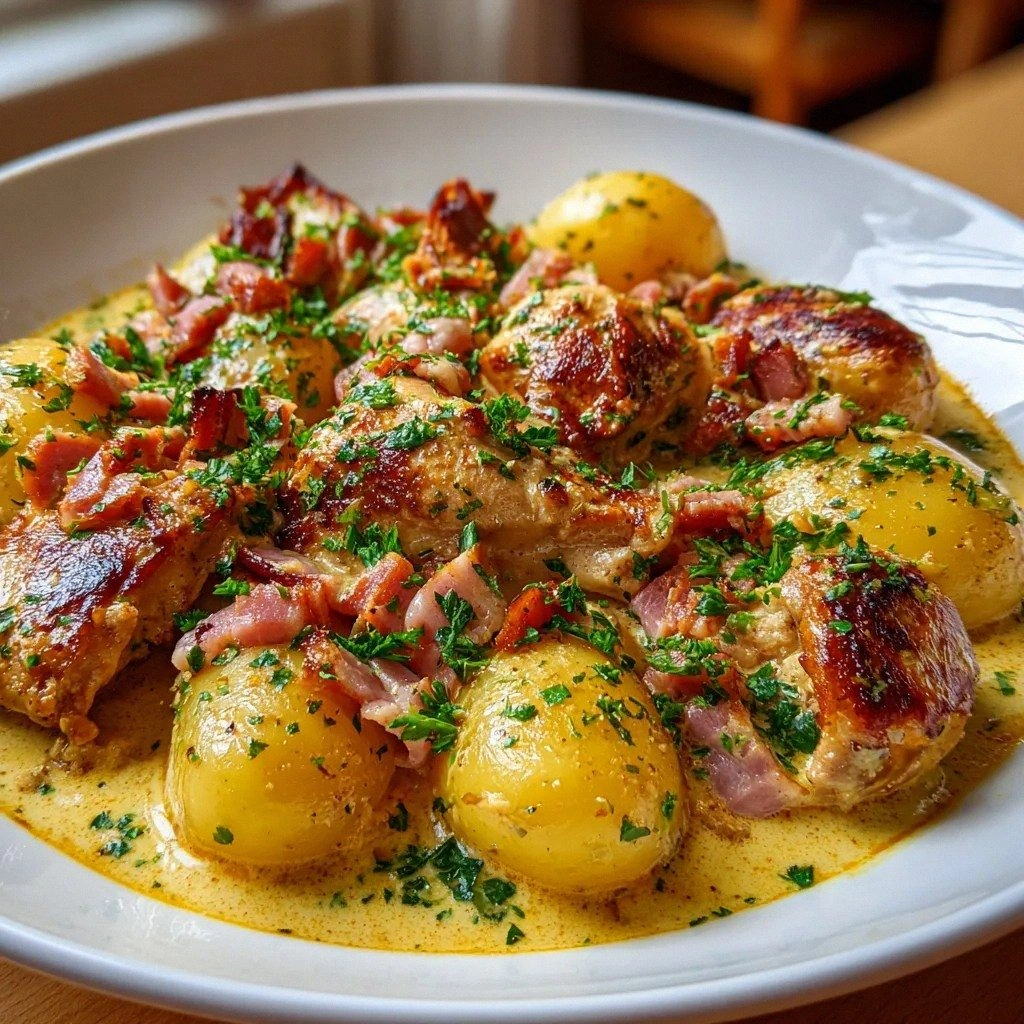
The Method — Step by Step
- Heat a large Dutch oven or heavy‑bottomed pot over medium heat. Add 2 tablespoons of olive oil and let it shimmer. Once the oil is hot, drop in the diced onions and sauté until they turn translucent and just start to brown, about 5 minutes. The onions should smell sweet, like caramel in progress.
- Introduce the diced ham to the pot. Sear it until it develops a golden crust on all sides, about 3–4 minutes. This step locks in the ham’s juices and adds a savory depth that will carry through the stew.
- Add the sliced carrots to the pot and stir them into the mixture. Let them cook for 2 minutes, allowing them to release their natural sugars. The carrots should start to soften but still retain a slight bite.
- Pour in 4 cups of chicken broth, ensuring the vegetables are fully submerged. Bring the mixture to a gentle boil, then reduce the heat to low and let it simmer uncovered. The broth should bubble lazily, not roar.
- Add the diced potatoes to the pot, making sure they’re evenly distributed. Sprinkle in 1 teaspoon of garlic powder, 1 teaspoon of black pepper, and 1 teaspoon of salt. Stir gently to combine. The potatoes should begin to soften, taking about 15–20 minutes.
- Once the potatoes are tender, cover the pot and let the stew cook for an additional 5 minutes. This step allows the flavors to meld and the broth to thicken slightly. The pot should emit a comforting aroma that makes your mouth water.
- Taste the stew and adjust seasoning if necessary. If you prefer a richer broth, add a splash more chicken broth or a drizzle of olive oil. The final texture should be silky, with each ingredient distinctly recognizable.
- Serve hot, garnished with a sprinkle of fresh parsley or a pat of butter if desired. The stew should be steaming, with a glossy surface that glistens like liquid gold.
That’s it — you did it. But hold on, I've got a few more tricks that'll take this to another level…
Insider Tricks for Flawless Results
The Temperature Rule Nobody Follows
Most people think a stew needs a high simmer, but a low, steady heat preserves the integrity of each ingredient. Keep the pot on low for the final 10 minutes; this allows the potatoes to finish cooking without disintegrating. I’ve seen a few people over‑boil their stews, and the result is a soggy mess.
Why Your Nose Knows Best
Before adding the last spoonful of broth, take a deep sniff. If the aroma is too bland, it’s time to add another pinch of salt or a dash of pepper. Your nose is a more reliable judge of flavor than your taste buds at this point.
The 5‑Minute Rest That Changes Everything
Let the stew sit covered for 5 minutes after you turn off the heat. This allows the flavors to settle and the liquid to thicken slightly. A friend once tried skipping this step and the stew tasted raw; the rest is the secret to silky perfection.
Use a Dutch Oven for Even Heat
While a skillet will work, a Dutch oven distributes heat more evenly, preventing hot spots that can scorch the bottom. If you’re using a non‑stick pan, be cautious of overheating the oil, which can create a bitter taste.
Finish with a Splash of Cream
If you’re feeling indulgent, stir in a tablespoon of heavy cream at the end for a richer mouthfeel. This step is optional but elevates the stew into a truly decadent dish.
Creative Twists and Variations
This recipe is a playground. Here are some of my favorite ways to switch things up:
Smoky Chipotle Version
Swap the garlic powder for chipotle powder and add a splash of smoked paprika. The result is a smoky, slightly spicy stew that pairs beautifully with a dollop of sour cream.
Herb‑Infused Delight
Stir in a handful of fresh thyme or rosemary during the last 10 minutes of cooking. The herbs give the stew a fragrant, earthy undertone that complements the ham.
Vegetarian Take
Omit the ham and add a cup of diced mushrooms. The mushrooms absorb the broth’s flavor and add a meaty texture, making the dish hearty even without meat.
Asian Twist
Replace chicken broth with vegetable broth and add a splash of soy sauce and a pinch of sesame oil. Garnish with sliced green onions and a sprinkle of toasted sesame seeds for an umami kick.
Cheesy Finale
At the end of cooking, stir in a handful of shredded cheddar or Gruyère. The cheese melts into the stew, creating a creamy, melty layer that’s irresistible.
Storing and Bringing It Back to Life
Fridge Storage
Cool the stew completely before transferring it to an airtight container. Store in the refrigerator for up to 3 days. The flavors deepen, making it even more delicious the next day.
Freezer Friendly
For longer storage, portion the stew into freezer‑safe containers and freeze for up to 2 months. Thaw overnight in the fridge before reheating.
Best Reheating Method
Reheat gently on the stovetop over low heat, adding a splash of water or broth to keep it moist. Stir frequently until heated through. Add a tiny splash of water before reheating — it steams back to perfection, restoring the original texture.